
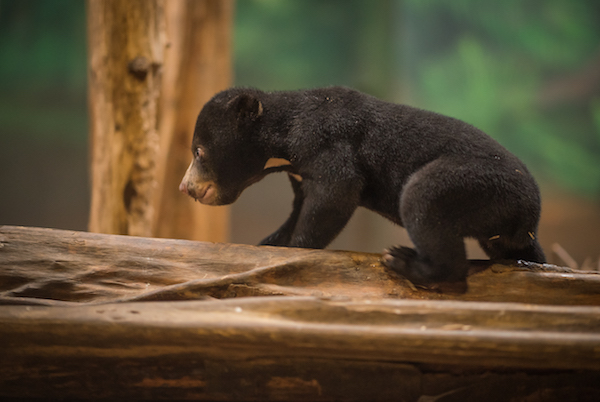
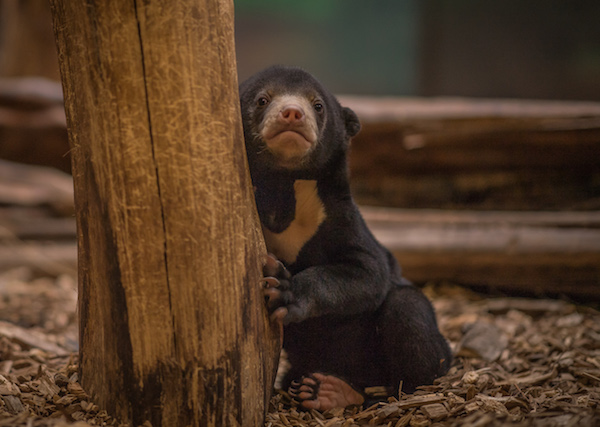
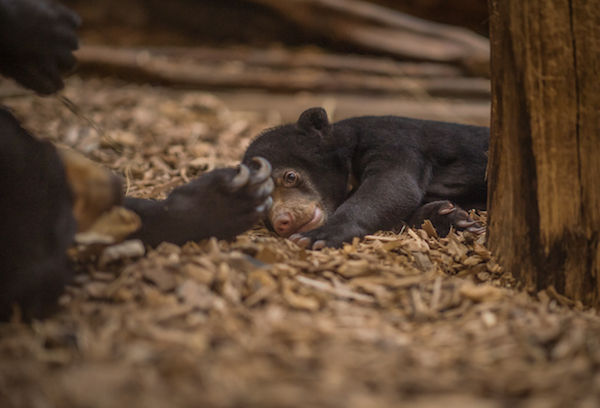
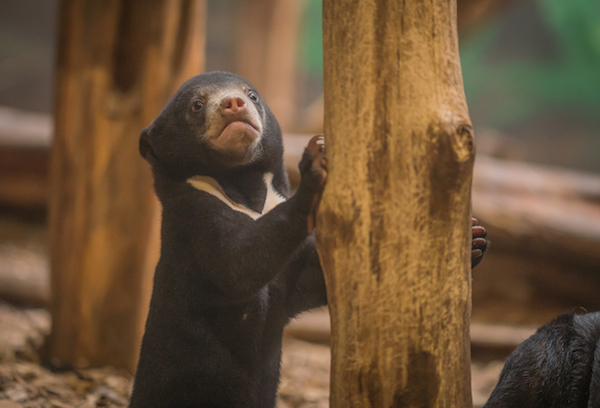
A rare sun bear cub has been named Kyra by keepers at Chester Zoo.
Born to parents who were rescued from illegal wildlife traders in Cambodia, the cub is the first of its kind ever to be born in the UK.
The female cub, now 16 weeks old, delighted conservationists when she was born at Chester Zoo in June, not least given the remarkable survival story of her parents who were rescued from illegal wildlife traders in Cambodia.
Mum Milli and dad Toni were taken from the wild by poachers when they themselves were cubs and kept as mistreated pets.
After being discovered in a very poor state, and nursed back to health by conservationists working for the Free The Bears organisation in Cambodia, the pair were then brought to the UK.
They were first transferred to the Rare Species Conservation Centre in Kent before arriving at Chester Zoo to complete their recovery.
Now, despite their troubled start to life, they have had a healthy baby girl and zoo staff say the trio is doing fantastically well. Keepers chose the name Kyra as it means ‘sun goddess’.
Sun bear facts:
- Scientific name: Helarctos malayanus
- The new cub Kyra was born at Chester Zoo on 13th June 2018
- Milli and Toni first arrived in the UK in October 2013
- They are the first sun bears to live at Chester since 1976
- The sun bear is the smallest of the world’s eight living species of bear
- Sun bears get their iconic name from the yellow or orange crescent marking on their chest, which legend says resembles the rising or setting sun.
- The species is also known as the ‘honey bear’ due to its love for honey – which it extracts by using its famously long tongue
- The Malay name for the tree-loving sun bear means “he who likes to sit high”
- Sun bears use their long tongue to eat termites and ants, beetle larvae, bee larvae, honey and a large variety of fruit species, especially figs
- They have powerful jaws that can tear open trees in search of insects to eat
- Their short black fur helps then to keep cool in hot climates
- They have big paws with large claws and hairless soles to help them climb
Sun bears are listed as vulnerable to extinction on the International Union for the Conservation of Nature’s (IUCN) Red List of threatened species.
Their demise is a result of widespread habitat loss to make way for palm oil plantations, human-wildlife conflict, hunting and the illegal wildlife trade.
Chester Zoo has joined forces with agencies across the world to tackle the illegal wildlife trade.
Experts hope that the new global campaign will inspire the public to report offences when they see or suspect them.
You can find out more about the initiative here.