Cheshire West and Chester Council and Thwaites has come to a mutual decision to end their partnership arrangement to restore Dee House.
The news comes after the council entered into a conditional development agreement with Thwaites in September 2016 to convert the building into a hotel.
Thwaites CEO Rick Bailey commented: “We are very disappointed that we can’t proceed with this development, as Dee House is a fantastic location with great potential.
“We have worked very hard, alongside the council, to find a way of bringing our plans to life.
“However,” Rick added: “Even just securing safe access to the building has proved to be far more expensive and challenging than anyone ever anticipated.
“We have looked into every option available but unfortunately we have been unable to find a workable solution that is financially viable.
“After an enormous amount of consideration and discussion, we have made the difficult decision not to proceed at this time.
“We have spoken at length with the council and believe allowing them to take back the lead in the project is now the best way forward.”
He concluded: “We are definitely not closing the door completely but for the moment there are too many unknowns for us to be able to take it forward.”
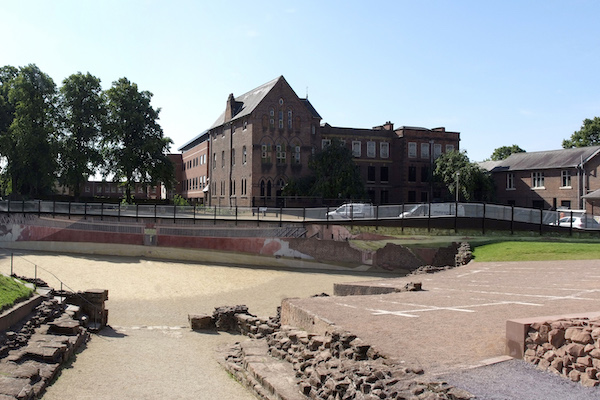
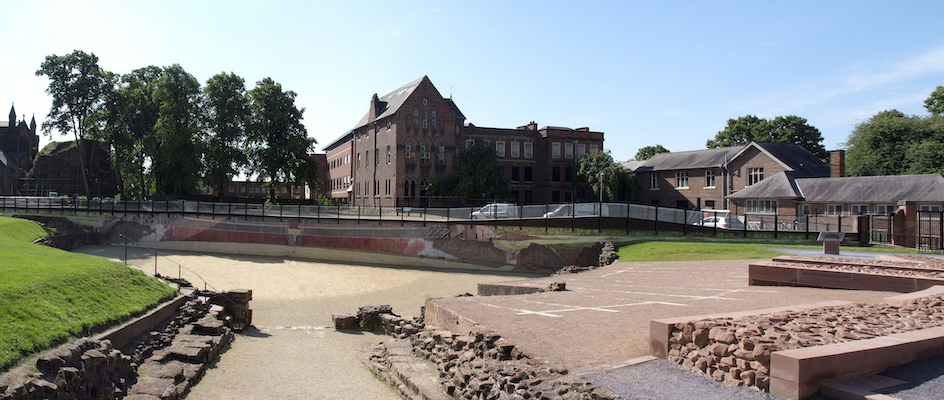
Dee House is an important part of Chester’s history, and the council says it remains committed to finding a long term solution for the site.
Cllr Louise Gittins said: “Finding a solution for Dee House was never going to be easy.
“We are disappointed that our plans to implement a private-sector led scheme have not been able to progress.
“However, through the extensive work undertaken by Thwaites, we have accumulated significant knowledge which will be invaluable in informing future decisions about the site.
“We believe it is now important to take stock of this new intelligence within the context of the wider city and the findings of the Roman Amphitheatre Chester Report Volume 1 published late last year.”
Cllr Gittins added: “It is our intention to work in partnership with Chester Growth Partnership who will establish a dedicated stakeholder group of interested parties given the importance of the Dee House site.
“We look forward to working with Chester Growth Partnership and as the review progresses we will share the findings with the wider community and will consult on the future options which emerge.”
Peter Carstensen, chair of Chester Growth Partnership, commented: “Dee House is a key project within the One City Plan and we are delighted to have the opportunity to bring together stakeholders to review options and help find a way forward.
“We welcome the opportunity to work with the council in looking at future options for the site and are keen to maintain momentum on the project.
“Our group will bring together significant key stakeholder knowledge and expertise. We will be inviting both Civic Trust and Chester Archaeological Society to participate.”
About Chester Ampitheatre and Dee House
Who owns Chester Amphitheatre?
Chester Amphitheatre is a Scheduled Ancient Monument. The excavated area of the amphitheatre is owned by the government.
The unexcavated area of the amphitheatre – upon which Dee House is located – is owned by Cheshire West and Chester Council.
What is the role of English Heritage in relation to the amphitheatre?
English Heritage acts as guardian for the part of the amphitheatre in government ownership, the excavated northern part of the site. They have no responsibility for the unexcavated part.
The excavated area of the amphitheatre is managed by Cheshire West and Chester Council by agreement with English Heritage.
What is the role of Historic England in relation to the amphitheatre?
Historic England is the government’s expert advisor on the nation’s heritage with a statutory role in the planning system.
It provides advice and guidance on any development proposals that might impact upon England’s historic environment.
As a Scheduled Ancient Monument, any works to Chester Amphitheatre require scheduled monument consent from the secretary of state (not the local planning authority).
Historic England manages the process of scheduled monument consent on behalf of the secretary of state.
Why can’t the remaining amphitheatre be excavated?
Historic England state that excavations of the buried remains of the Roman amphitheatre in Chester carried out between 2004 and 2006 showed that only fragments of the amphitheatre survive as most of the stonework had previously been removed for re-use elsewhere.
These excavations increased our understanding of the design and development of the amphitheatre and it is unlikely that further excavation will increase that understanding.
The view of most experts is that it is also highly unlikely that further excavation will expose anything which can be displayed without a very high level of reconstruction.
Most of the walls on display today are 20th century reconstructions of what was once there.
Who owns Dee House and why is it significant?
Dee House is owned by Cheshire West and Chester Council. It is a Grade II listed building.
Dee House was built around 1730 for James Comberbach, a former mayor of Chester, who died in 1737.
In 1854 the house was acquired by an order of Roman Catholic nuns who, in 1867, commissioned a Liverpool architect Edmund Kirby to extend the building with a new classroom and chapel to the east of the original house, designed in a Gothic style.
A late 19th century extension to the west matches the design of the original house.
Although the original house was refitted in the early 19th century much 18th century fabric survives, including the main entrance hall and staircase, doorcases and plaster ceilings.
The Victorian extensions are of interest both as the work of an architect of considerable importance, and in demonstrating the revival of Roman Catholicism in the region during the second half of the 19th century.
The national importance of the complex is reflected by its Grade II listing.