
Plans for a new pedestrian and cycle route in Crewe are going on display this week.
These plans are separate to the ‘Mini-Holland’ proposals being drawn up earlier this year.
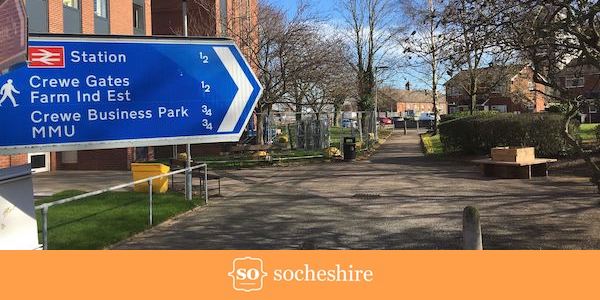
Cheshire East Council is hoping to bring about a safer and greener route which would link Crewe town centre with the town’s railway station.
The authority is currently asking the public for its views on the proposed ‘Mill Street Corridor’ scheme, which is one of a number of projects being supported by around £23m of funding from the government.
The scheme aims to deliver an improved route for pedestrians and cyclists, as well as new and improved outdoor spaces and local amenities along the route.
Before they submit a planning application for the scheme, the council is inviting people to attend one of the drop-in events taking place at Crewe Market Hall.
The first event will take place on Thursday 16th February (2-7pm) and the second will be on Friday 17th February (11am-5pm).
Deputy leader of the council, Cllr Craig Browne said: “This proposed new route will link two key areas – the town centre and railway station – and make it easier for people to walk and cycle between them.
“Our plans focus on making the spaces along the route high-quality, accessible, and safe, while also supporting biodiversity and healthier lifestyles and encouraging community use.
“I encourage people who live in, visit or travel around the area to attend one of the drop-in sessions to find out more about the proposals, share their views and help shape the plans being driven forward for Crewe.”

The new route will run along Nantwich Road, Pedley Street and Railway Street, and cut through Waverley Court and Wesley Place.
From there it would run north along Mill Street then Brook Street towards the town centre.
Doug Kinsman is chair of Crewe Town Board, which is overseeing the Crewe Towns Fund programme.
He said: “As with all projects being supported by the Towns Fund, we want to hear from Crewe’s communities about the benefits and opportunities they want to see delivered, and so I’d encourage people to take a closer look at what is being proposed and to have their say at the drop-in events.”
The Mill Street Corridor route is planned to link up with other proposed schemes, including the Valley Brook green corridor (which is also being supported by the Towns Fund) and aims to connect Queens Park with Mill Street / Edleston Road.
These would be joined up by a cycling and walking route, primarily through parks and open spaces.
The route would also link with the Southern Gateway pedestrian and cycling scheme – one of the projects being paid for by a £14m allocation from the government’s Future High Streets Fund.
This would create a new arrival point into the town, with a new pedestrian walkway and cycleway between High Street and the Lifestyle Centre.
Towns Fund, Town Deals, Future High Streets – what do they all mean?
We hear you! There are a lot of weird new phrases being used – but what on earth does each one mean?
Towns Fund
On 27th July 2019, the prime minister at the time (Boris Johnson) announced a new Towns Fund to support 101 places in England to develop their own ‘Town Deal’ project.
The idea is to support towns to bid for money to get started with projects that will bring about regeneration and long-term economic growth for their area.
Town Deals
A Town Deal is an agreement in principle between the government, council and a local town deal board.
It sets out a vision and a strategy for the town, and details about what each party will do to achieve this goal.
All of the towns chosen to work towards a Town Deal have also received funding to pay for projects that will have an immediate impact and help ‘build back’ after the Covid-19 pandemic.
Future High Streets Fund
The Future High Streets Fund is a pot of money which is being allocated with the aim of renewing and reshaping town centres in a way that improves people’s experience and ensures future sustainability.
In total, 72 places will receive a slice of £831 million from the Future High Streets Fund to help them recover from the pandemic by improving things like transport links, building new homes and transforming underused spaces.