
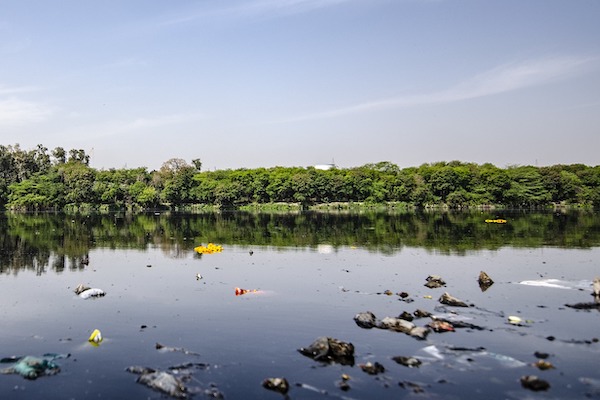
Chester Zoo’s boss and the leader of Cheshire West and Chester Council have both called on water companies to do better to stop raw sewage being released into local rivers.
The council said it wants water companies operating in the borough to address the levels of raw sewage being released into its rivers.
It comes just days after Chester Zoo wrote an open letter to one water company calling for action about sewage released into the River Dee.
Cllr Louise Gittins, leader of the council, said: “We fully agree with the view stated by Chester Zoo and agree that what appear to be frequent discharges of sewage into the River Dee are just not acceptable.”
The council has recently invested more than £8 million in a new, one-kilometre tunnel under Chester to reduce flooding and untreated sewage discharges into the River Dee.
Cllr Gittins said: “This new drain can handle 1,000 litres of rainwater per second and serves an area of around 50,000m2 – which equates to around nine football pitches.
“The council’s contribution is just a small part of what is required, and we now call on the water companies themselves and the government to follow suit and to address the situation.”
In a letter to Welsh Water (Dwr Cymru), Chester Zoo CEO Jamie Christon said: “The River Dee is of international importance for biodiversity and a significant natural asset, both locally and nationally.
“Your discharge site is only a couple of miles upstream from the Dee Estuary Special Protection Area, Special Area of Conservation and Ramsar site.
“These designations represent the international importance of the Dee estuary and lower river catchment for rare and declining birds such as redshank, curlew, black-tailed godwit and pintail, as well as for declining habitats including saltmarsh, Atlantic salt meadows and mudflats.
“As I am sure you can appreciate, pollution of this environment puts these species and others at risk and undermines the protection afforded.”
He added: “The River Dee itself is covered by a number of Site of Special Scientific Interest designations on the English and Welsh stretches and hosts important populations of wildlife including declining invertebrates like the Scarce Yellow Stonefly which was rediscovered in the river in 2017.
“The River Dee is the only known site for this critically endangered species in the UK.”
Mr Christon said the zoo is actively involved in protecting the species from extinction, adding that sewage discharge along the river presents a significant threat to them and other wildlife.
He said: “Whilst we understand the pressure that recent dry conditions place on our wastewater system, we believe that allowing discharge of untreated sewage is unnecessary given the alternatives available via Sustainable Drainage Systems which can be designed to manage stormwater locally.
“We believe the current situation is totally unacceptable and would like to know what Dwr Cymru are doing to stop the discharge of sewage into the river at Chester, both in the short term and as part of your long-term strategy for ensuring our waterways are clean and healthy.”